

Address
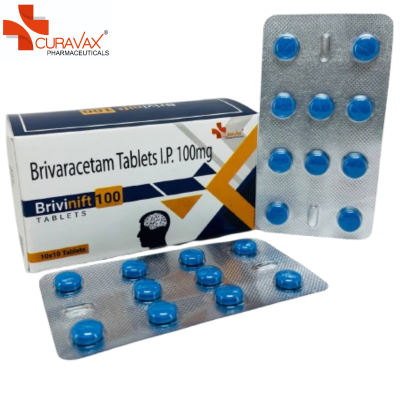
Brivaracetam 100 mg Tablets (Brivinift 100)
Brivinift 100 is a tablet containing Brivaracetam 100 mg marketed by Curavax Pharmaceuticals Pvt. Ltd. Brivaracetam is an antiepileptic medicine used for the treatment of partial onset seizures (focal seizures).
Brivinift 100 Composition
Brand Name: Brivinift 100
Generic Name: Brivaracetam
Strength: 100 mg
Dosage Form: Tablet
Therapeutic Category: Antiepileptic / Anticonvulsant
Company: Curavax Pharmaceuticals Pvt. Ltd.
Contact Details
Address:
Khasra No. 8/6, 15/1, Plot No. 8, Kuldeep Nagar, Ambala Cantt., Haryana
Phone: +91-89503-29008
Email: curavax@gmail.com
What is Brivaracetam (Brivinift 100) ?
Brivaracetam (Brivinift 100) is an antiepileptic medicine used to help control seizures. It is specifically indicated for partial onset seizures which are seizures that begin in a particular area of the brain. It may be prescribed as monotherapy or as adjunctive therapy depending on the patient’s clinical situation.
Brivinift 100 Uses
Brivinift 100 contains brivaracetam 100 mg and may be prescribed for the management of:
- Partial-onset seizures
- Focal seizures associated with epilepsy
- Seizure disorders where brivaracetam therapy has been prescribed by a qualified healthcare professional
How Does Brivinift 100 Work?
Brivaracetam selectively binds to SV2A (synaptic vesicle protein 2A) in the brain. This is believed to influence neurotransmitter release and reduce abnormal neuronal activity associated with seizures.
Brivinift 100 Dosage
For adults aged 16 years and older, current prescribing information lists a recommended starting dosage of 50 mg twice daily (100 mg per day). Depending on response and tolerability the dosage may be adjusted to 25 mg twice daily up to 100 mg twice daily.
Possible Side Effects of Brivaracetam
- Sleepiness or somnolence
- Dizziness
- Fatigue
- Nausea
- Vomiting
- Headache
- Irritability or other behavioral changes
Precautions While Using Brivinift 100
Patients taking Brivaracetam should follow their doctor’s instructions carefully.
Driving and Operating Machinery
Brivaracetam may cause sleepiness and fatigue. Patients should avoid driving or operating machinery until they understand how the medicine affects them.
Mental or Behavioral Changes
Changes such as irritability, aggression, depression, anxiety, or unusual behavior should be discussed with a healthcare professional. Patients should also be monitored for suicidal thoughts or behavior.
Allergic Reactions
Hypersensitivity reactions can occur. Symptoms such as bronchospasm or angioedema require urgent medical evaluation.
Pregnancy
Pregnant patients or those planning pregnancy should discuss brivaracetam treatment with their healthcare professional. Current prescribing information includes a pregnancy warning based on animal data indicating potential fetal harm.
Brivaracetam Drug Interactions
Brivaracetam can interact with certain medicines. Current prescribing information specifically discusses interactions involving medicines such as rifampin, carbamazepine, phenytoin, and levetiracetam.
Brivinift 100 in Epilepsy Management
Brivaracetam is one of the antiseizure medicines used for partial onset seizures. Whether Brivinift 100 is appropriate depends on the patient’s seizure type, medical history, other medicines, age, and response to treatment.
Who Should Take Brivinift 100?
Brivinift 100 should be used only when prescribed by a qualified healthcare professional. It may be considered when brivaracetam therapy is appropriate for a patient with partial-onset seizures.
It is not appropriate to self-medicate with Brivinift 100 simply because a person experiences a seizure-like episode. Proper diagnosis of the seizure type and underlying condition is important.
Who Should Avoid Brivinift 100?
Brivaracetam should not be used in people with a known hypersensitivity to brivaracetam or any of its inactive ingredients.
Patients with liver problems, a history of psychiatric symptoms, pregnancy, or those taking multiple antiseizure medicines should discuss their complete medical history with their healthcare provider before treatment.
Storage of Brivinift 100
Store the medicine according to the storage instructions provided on the product packaging. Keep medicines:
- In a safe place
- Away from excessive heat and moisture
- Out of reach of children
- In the original packaging when possible
Always check the product label for specific storage instructions.
Brivinift 100 – Product Overview
| Product Detail | Information |
|---|---|
| Brand Name | Brivinift 100 |
| Generic Name | Brivaracetam |
| Strength | 100 mg |
| Dosage Form | Tablet |
| Therapeutic Class | Antiepileptic / Anticonvulsant |
| Main Indication | Partial-onset seizures |
| Marketing Company | Curavax Pharmaceuticals Pvt. Ltd. |
Frequently Asked Questions
What is Brivinift 100?
Brivinift 100 is a brand of Brivaracetam 100 mg tablets, marketed by Curavax Pharmaceuticals Pvt. Ltd. Brivaracetam is an antiepileptic medicine indicated for partial-onset seizures.
What is Brivinift 100 used for?
It is used for the treatment of partial-onset seizures when prescribed by a healthcare professional.
Is Brivinift 100 a sleeping medicine?
No. Brivaracetam is an antiepileptic medicine. Sleepiness can occur as a side effect, but it is not intended as a sleeping medicine.
Can Brivinift 100 be stopped suddenly?
Patients should not stop brivaracetam suddenly without medical advice. Current prescribing information recommends gradual withdrawal of antiepileptic therapy.
Can Brivinift 100 cause sleepiness?
Yes. Somnolence and fatigue are recognized adverse reactions, so patients should be cautious about driving or operating machinery until they know how the medicine affects them.
Is Brivinift 100 available only on prescription?
Brivaracetam is a prescription antiepileptic medicine and should be used under the supervision of a qualified healthcare professional.
Conclusion
Brivinift 100 (Brivaracetam 100 mg Tablets) by Curavax Pharmaceuticals Pvt. Ltd. is an antiepileptic tablet formulation containing brivaracetam. Brivaracetam is indicated for the treatment of partial-onset seizures and may be used as monotherapy or adjunctive therapy according to the prescribing clinician’s assessment.