

Address
PCD vs. Pharma Franchise — What’s the Difference?
The pharmaceutical industry uses various business models to expand product reach. Two commonly talked-about models are PCD (Propaganda Cum Distribution) Pharma Franchise and Pharma Franchise. While the terms are often used interchangeably, there are subtle differences in how they work and how much investment, control, and responsibility the business partner has.
1. What Is a PCD Pharma Franchise?
PCD stands for Propaganda Cum Distribution. In this model:
-
A pharmaceutical company gives an individual or distributor the rights to market and distribute its products in a specific geographic area.
-
The partner gets exclusive rights or monopoly rights in that region.
-
The parent company supplies the products and often provides promotional material (like brochures, sample medicines, MR bags, etc.).
-
Franchise partners handle local marketing, sales, and distribution under the company’s brand name.
Key benefits of PCD model:
-
Lower investment compared to other business formats.
-
Ideal for beginners or smaller entrepreneurs.
-
Monopoly rights in a defined area to reduce competition.
2. What Is a Pharma Franchise?
A Pharma Franchise is a broader model where a pharma company grants the rights to an individual or organization to sell a wide range of its products under the company’s brand. This model often involves:
-
Wider operational area — potentially covering larger regions or states.
-
Higher investment — because the business often handles larger stocks and broader territory.
-
Structured support and oversight from the parent company — including marketing guidance, sales targets, and branding standards.
-
Franchisees may have more formal contractual obligations compared to simple PCD partners.
3. Core Differences Between PCD and Pharma Franchise
| Aspect | PCD (Propaganda Cum Distribution) | Pharma Franchise |
|---|---|---|
| Scale of Operation | Smaller, local or district level | Larger, regional or national level |
| Investment | Lower start-up and inventory cost | Higher investment required |
| Marketing Support | Basic marketing materials from parent company | More extensive support and structured plans |
| Territory Rights | Often exclusive & limited to smaller territory | Can cover larger and multiple territories |
| Sales Targets | Generally no strict targets | May have targets to meet |
| Business Control | More autonomy for partner | Franchisee must meet company standards |
In essence, PCD is often seen as a smaller-scale entry model, while a full pharma franchise is larger in scale, more structured, and requires more investment.
4. Why These Models Are Popular in India
Both PCD and Pharma Franchise models are widely used in India because they:
 Allow entrepreneurs to enter the pharmaceutical sector without setting up manufacturing. Help pharmaceutical companies expand reach across diverse geographies. Reduce operational risk for new business owners compared to independent startups. Offer established brand support and products with regulatory compliance (DCGI, WHO-GMP, ISO).
5. Curavax Pharmaceuticals — A Case Example
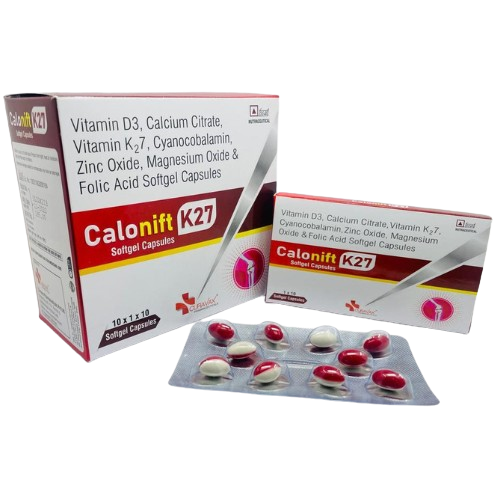
Curavax Pharmaceuticals Pvt. Ltd. is an Indian company based in Ambala, Haryana that operates primarily as a PCD Pharma Franchise company while also offering third-party manufacturing services.
Send Query – +91-8950329008
About Curavax Pharmaceuticals
-
Established in 2022 with headquarters in Ambala Cantt, Haryana.
-
Holds industry certifications like WHO-GMP and ISO 9001:2015 — indicators of quality manufacturing standards.
-
Offers a wide product portfolio including tablets, capsules, syrups, injectables, topicals, etc.
-
Provides PCD franchise opportunities with territorial exclusivity (monopoly rights) in many areas across India.
-
Also engages in third-party manufacturing for other brands.
Why Entrepreneurs Choose Curavax
-
Lower investment model suitable for start-ups.
-
Marketing support & promotional inputs to help franchise partners grow locally.
-
Quality standards help build trust among healthcare professionals and pharmacies.
However, because Curavax is a newer company, it’s advisable for potential partners to conduct due diligence — such as verifying licences, understanding franchise terms, and checking peer reviews — before committing.
6. Which Model Should You Choose?
-
Choose PCD Franchise if you are a beginner, want low investment, and prefer independent marketing freedom.
-
Choose Pharma Franchise if you have experience, higher capital, and want to operate at a larger scale with structured brand support.
Conclusion
Both PCD and Pharma Franchise models are vital routes for entering the pharmaceutical business, particularly in a market like India. PCD is generally smaller and easier to start, while a full-scale pharma franchise offers broader opportunities at a higher investment. Companies like Curavax Pharmaceuticals provide PCD opportunities enabling entrepreneurs to grow without heavy manufacturing setup, making them a strong choice for newcomers — with proper evaluation and planning.